Let's get you powered up
Solar incentives in NYC won’t last forever—now’s the time to make the switch. Reach out for a quick, custom quote and see how much you could save.
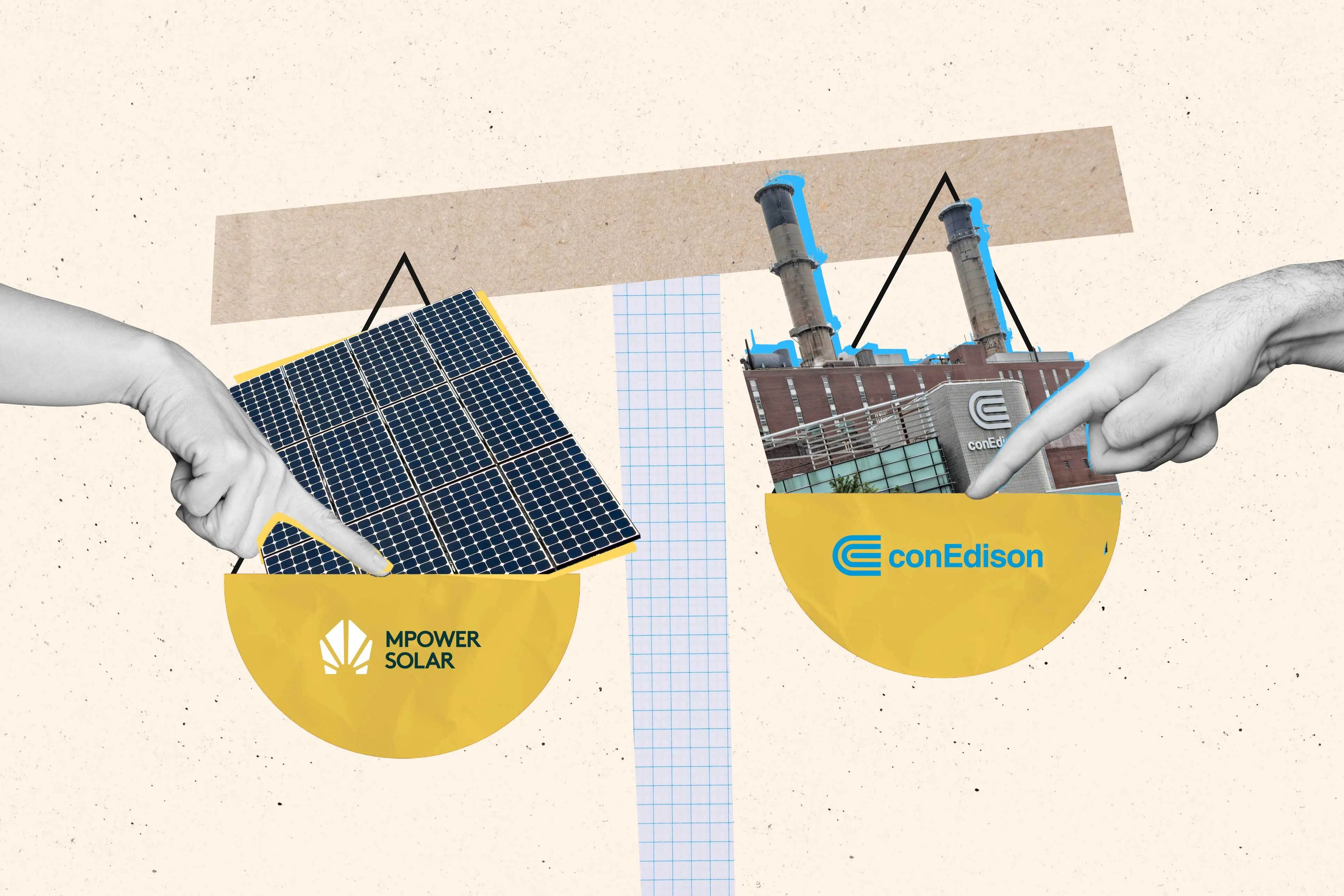
In 2026, electricity costs in New York City are among the highest in the United States, with the average residential bill around $350 per month. This equals roughly $4,200 per year. For many families, especially those in older brownstones or large single-family homes, utility bills have climbed sharply as Con Edison implements new rate adjustments. These rate increases are tied to planned infrastructure upgrades and clean-energy goals (along with *cough* *cough* substantial shareholder dividend payouts). As a result, electricity rates have increased by 3.5 % this year alone, with further rate hikes approved for 2027 and 2028.
At the same time, rooftop solar adoption continues to grow in the city—driven not only by environmental goals, but a desire to minimize Con Edison bills as much as possible. While 2026 brings a stark change—the elimination of the historic federal solar tax credit—the economics of residential solar are still cost effective.
Let’s break down the cost of Con Edison vs. solar using real homeowners in NYC. And be sure to check out these five reasons why going solar makes financial sense.
Con Edison is NYC’s primary electric utility so New Yorkers are subject to a bit of a monopoly. Its rates include a combination of supply and delivery charges that are set through tariffs approved by the New York State Public Service Commission.
According to the latest data, NYC residents are paying about 31¢ per kilowatt-hour (kWh)—about 65% above the national average. With an average household using roughly 1,100 kWh per month, that equates to around $350 per month.
This figure has been rising for years. For context, a hypothetical household that paid $250-$300 per month a few years ago could easily be paying $350–$400 today.

A typical residential solar installation in the New York metro area in 2026 costs significantly more upfront than it did during the years of generous federal tax credits. According to recent solar market data specific to New York, a system sized to fully offset a typical NYC home (about 11–12 kW) runs around $30,000.*
Luckily for New Yorkers, however, local tax incentives including the New York State solar tax credit (25%) and the New York City solar property tax abatement (30%) provide some benefit—these two stacked credits offset 55% off the total cost of your system. These credits narrow the margin between solar system cost and what homeowners would otherwise spend on electricity over time.
For example, with New York’s high utility rates, a solar system that offsets 90% of a household’s electricity could save approximately $4,000 in energy costs in its first year alone. With the additional solar tax incentives available to New Yorkers, many installations now have a shorter payback period.
Those up front costs only tell part of the story, however. Once a solar system is activated, Con Edison bills drop drastically.
*This pricing depends on a number of factors like roof size, roof orientation, and type of system installed (flat, tilted, canopy).
Take the real case of Stephanie, a New York homeowner who went solar with Mpower Solar. Before her system was installed, Stephanie’s Con Edison bills averaged well above the city median—sometimes $600 or more in the summer months, when air-conditioning usage peaks.
After installing a custom solar system designed by Mpower Solar, Stephanie saw her grid dependency plummet. Rather than facing ever-rising Con Edison bills, she is now paying less than $200 a month and producing most of her own electricity. Her system has cut her effective average monthly cost for electricity generation dramatically—turning what once was a major expense into a predictable, primarily maintenance-free investment. For details on her system size, yield, and savings over time, see Stephanie’s full case study on our Mpower Solar site.
That kind of outcome is exactly why many NYC homeowners are considering solar. To estimate your own solar savings, try our free solar savings calculator.
To recap, there are three main factors to consider when evaluating the benefits of going solar.
1. Your Electric Bills Over Time: A Con Edison customer in NYC paying around $350/month can expect that cost to rise with future rate adjustments tied to infrastructure and clean-energy mandates in 2026, 2027, and 2028. Solar system owners replace that variable monthly expense with the output of a system whose cost is largely set at installation. Solar lets you lock in energy rates for substantial long term savings.
2. The Payback Horizons for Solar in NYC: The typical break-even timeline for a NYC solar investment, based on current pricing, and including the 55% stacked NYC solar tax incentives, is in the 7-10 year range. This still compares favorably with decades of rising electric bills.
3. Your Appetite For Risk: With Con Edison, homeowners have no control over rate increases or delivery fees. A rooftop solar installation, by contrast, puts electricity generation on your property, giving your control over your annual energy expenses. Plus, with an increasingly unstable geopolitical climate, renewable energy like solar offers both stability and security in a changing world.
New York’s high energy rates and cost of living make electricity affordability a constant concern. Con Edison’s yearly rate hikes strain household budgets and can even result in energy insecurity for vulnerable families.
At the same time, the market for solar in New York continues to grow: solar now generates enough electricity to supply nearly a million homes statewide, and local solar capacity has expanded rapidly over the last decade.
For NYC homeowners, the critical question in 2026 is whether to lock in more predictable, locally generated energy now or continue absorbing high bills from an increasingly expensive grid. We think the answer is clear.
While residential solar in 2026 usually requires an upfront investment*, the potential savings—especially in a city with some of the nation’s highest utility rates—remain significant. Add in up to55% in solar tax credits, and the savings are even more substantial. For homeowners like Stephanie, going solar is not just an environmental statement, it’s a long-term financial strategy that offers protection from future rate hikes and budget volatility.
If you’re fed up with paying Con Edison more every year, and interested in exploring your solar options, schedule your free consultation with an Mpower Solar advisor today.
*Check out our leasing options for zero-dollar-up-front payment options.
Inside you'll discover:
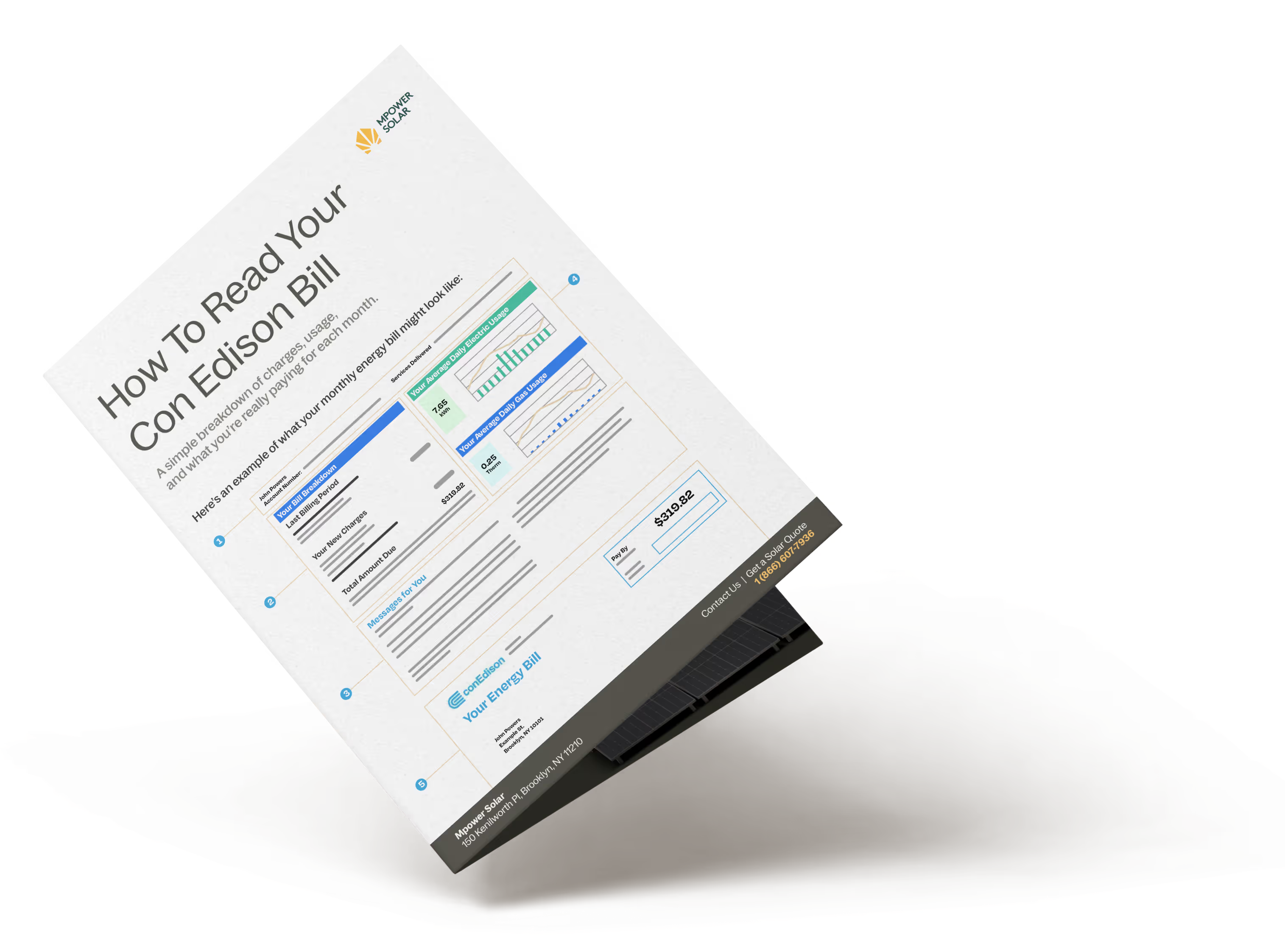
Solar incentives in NYC won’t last forever—now’s the time to make the switch. Reach out for a quick, custom quote and see how much you could save.
.png)
.png)