Let's get you powered up
Solar incentives in NYC won’t last forever—now’s the time to make the switch. Reach out for a quick, custom quote and see how much you could save.
.png)
You turned off the lights. You ran the AC less. Maybe you even swapped out your old appliances or unplugged things when you weren't using them. And then your Con Edison bill came and it was higher than last month.
This is one of the most common and most frustrating experiences for New York homeowners but the explanation isn't complicated. You just need to understand how Con Edison actually charges you.
The short answer: most of your bill has nothing to do with how much electricity you use.
When you look at your Con Edison bill, there are two main charges:
1. Supply charges: This is the actual cost of the electricity you consumed, measured in kilowatt-hours (kWh). Use less power, pay less here. This is the part you can control.
2. Delivery charges: This is what Con Edison charges to move electricity from the grid to your home. It covers infrastructure, maintenance, wires, poles, and a long list of fees and assessments. Here's the thing: delivery charges are largely fixed. They don't go down much when you use less power.
For most NYC homeowners, delivery charges make up the majority of the bill, often more than the cost of the electricity itself. So, when you conserve energy and cut your supply charges, your delivery charges stay roughly the same. The savings are real, but they're smaller than most people expect.
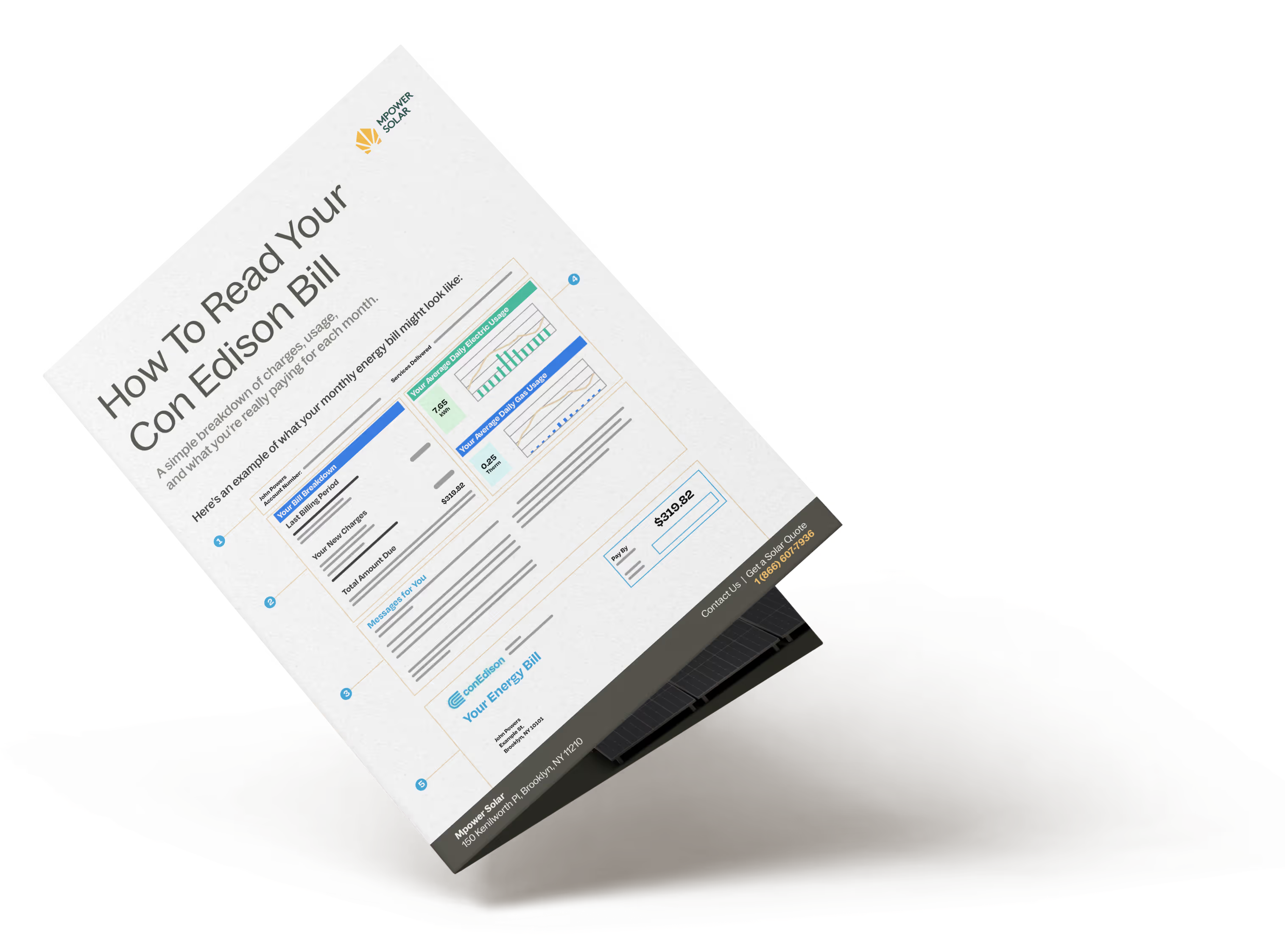
Curious to see these charges in action? Our free Con Edison bill decoder breaks down exactly where each charge appears on your bill.
Here's what's hiding in your delivery section:
Basic Service Charge: A flat monthly fee just for being connected to the grid. You pay this whether you use 10 kWh or 1,000 kWh.
Distribution Charge: Covers the local infrastructure that delivers power to your neighborhood. While partially tied to usage, it includes fixed components that don't change with your behavior.
System Benefit Charge: A fixed, state-mandated fee that funds energy efficiency and low-income programs.
Revenue Decoupling Mechanism (RDM): This one surprises people. If Con Edison collects less revenue because New Yorkers are conserving energy, the RDM allows them to recover that lost revenue through a surcharge. In other words, the more the whole city conserves, the more Con Ed can charge to make up for it. Your individual effort to use less can actually contribute to a higher rate for everyone.
Temporary State Assessment, Merchant Function Charge, NYC taxes: A collection of pass-through fees and taxes that appear on your bill regardless of usage.
Add all of these up and you can see why cutting your electricity use doesn't cut your bill by the same percentage. You're only reducing one slice of a much larger pie.
Here's the other half of the equation: Con Edison raises its rates every year.
In 2026, electric delivery rates rose by 3.5%. This follows years of similar or steeper increases.
The math is straightforward: if you reduce your electricity use by 5% but delivery rates go up 3.5%, your savings from conservation get partially wiped out by the rate increase. If you use the same amount as last year, you're paying more simply because the rate went up.
If you’re one of many New Yorkers who feel like you’re doing everything right and still losing ground on your energy bill– it’s because you likely are.
Inside you'll discover:
Con Edison officially designates June through September as "summer season," which comes with higher delivery and supply rates. If your higher bill arrived in the summer months, seasonal pricing is likely a factor on top of everything else.
The flip side is that winter bills can feel lower, even at the same usage level, because you're back to off-peak rates. This seasonal swing confuses a lot of homeowners into thinking they did something wrong when summer rolls around.
We're not saying don't conserve, but the structure of Con Edison's billing means that conservation by itself can only go so far.
You're working against:
Going solar doesn't eliminate your Con Edison connection, but it changes the math significantly.
Your panels generate electricity directly for your home, which reduces how much you pull from the grid. This cuts your supply charges substantially. And through New York's net metering program, any excess electricity your system produces gets credited back against your delivery charges too.
The result is a bill that looks very different from what you're used to: lower supply costs, credits offsetting delivery charges, and a predictable solar lease payment that doesn't move year to year regardless of what Con Edison decides to charge next.
The average Mpower Solar customer sees their monthly payment drop by about 20% from day one without changing a single habit. [See how the numbers compare for NYC homeowners here.
If your bill went up even though you used less power, you're not missing something. The system is designed in a way that limits how much your behavior can affect the final number. Fixed delivery charges, annual rate increases, seasonal pricing, and the RDM all work against the savings you're trying to create.
Solar is one of the few ways to actually step outside that system — and with a lease, you can do it for $0 down with immediate savings on your first bill.
Because most of your bill is made up of delivery charges– fixed and semi-fixed fees for infrastructure, grid maintenance, and state assessments– that don't decrease when you use less power. Only the supply portion of your bill reflects actual usage. Rate increases on both supply and delivery can also offset any savings from conservation.
Delivery charges are the fees Con Edison collects to move electricity from the grid to your home. They include the: Basic Service Charge, Distribution Charge, System Benefit Charge, Revenue Decoupling Mechanism, Merchant Function Charge, and various state and city taxes. These make up a significant portion of your bill and are largely fixed regardless of how much electricity you use.
The RDM is a surcharge that allows Con Edison to recover revenue lost when customers conserve energy. Because Con Edison's fixed costs don't change when usage drops, the RDM lets them maintain their revenue by charging a higher rate. It's one reason why city-wide conservation efforts don't always translate to lower bills.
Partially, yes. Through New York's net metering program, excess electricity your solar panels produce gets credited back against your Con Edison bill, including delivery charges. While solar doesn't eliminate the Con Edison connection or all fixed charges, it can significantly reduce what you owe each month.
A solar lease is the most effective way for most NYC homeowners to immediately lower their monthly energy costs — typically by 20% from day one. For a longer-term view of what waiting costs you, read our 25-year cost comparison.
Solar incentives in NYC won’t last forever—now’s the time to make the switch. Reach out for a quick, custom quote and see how much you could save.
.png)