Let's get you powered up
Solar incentives in NYC won’t last forever—now’s the time to make the switch. Reach out for a quick, custom quote and see how much you could save.
.png)
Here's something most people don't realize: flat roofs are actually great for solar.
In the rest of the country, solar installers work almost exclusively with pitched, shingle roofs. In New York City, the majority of homes, especially in Brooklyn, Queens, the Bronx, and Staten Island, have flat roofs. That means NYC installers have had to get creative. And over the past 15+ years, we've learned exactly what works, what doesn't, and why.
If you have a flat roof and you've been wondering whether solar is even worth considering for your home, this one's for you.
A pitched roof locks in your panel angle — you get whatever sun exposure the roof happens to face. A flat roof is a blank canvas.
With a flat roof, your installer can orient and tilt panels to optimize sun exposure based on your specific location, shading, and energy goals. That flexibility is a real advantage, especially in a dense city like New York where buildings and trees cast shadows at every angle.
NYC also averages about 1,200 sun hours per year — enough to make solar a genuinely worthwhile investment for most homeowners. Pair that flexibility with New York's strong solar incentives and you've got one of the better setups in the country.
There's no single "flat roof solar" solution. The right system depends on your roof's condition, available space, and how much energy you want to generate. Here's how the three main options break down.
Flush mount panels lie flat and low to the roof surface, giving your home a clean, minimalistic look. They're available for both flat and shingle pitched roofs, and they're a good fit if aesthetics matter or if you don't have much clearance from neighboring buildings.
The tradeoff: because they lie flat on a flat roof (rather than angled toward the sun), they're optimized for low profile over maximum output.
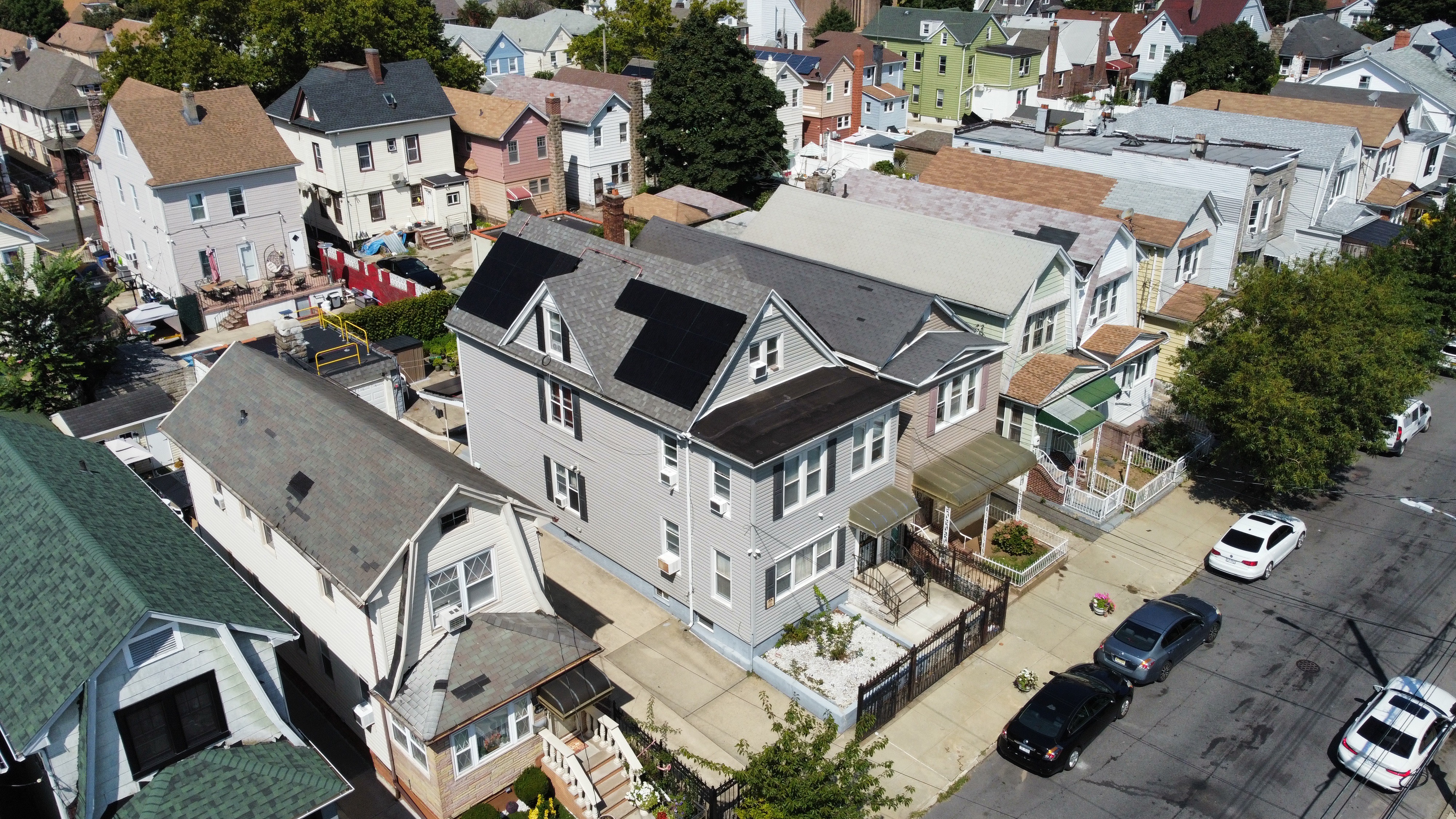
Tilt mount systems install panels at an angle, typically 10–30 degrees, to increase direct sun exposure. Compared to flush mounts on a flat roof, tilted panels can increase production by up to 10%.
This is often the sweet spot for NYC homeowners who want strong energy output without the footprint of a canopy. The panels are elevated, so air circulates underneath — which actually helps panels run more efficiently since heat reduces solar output.
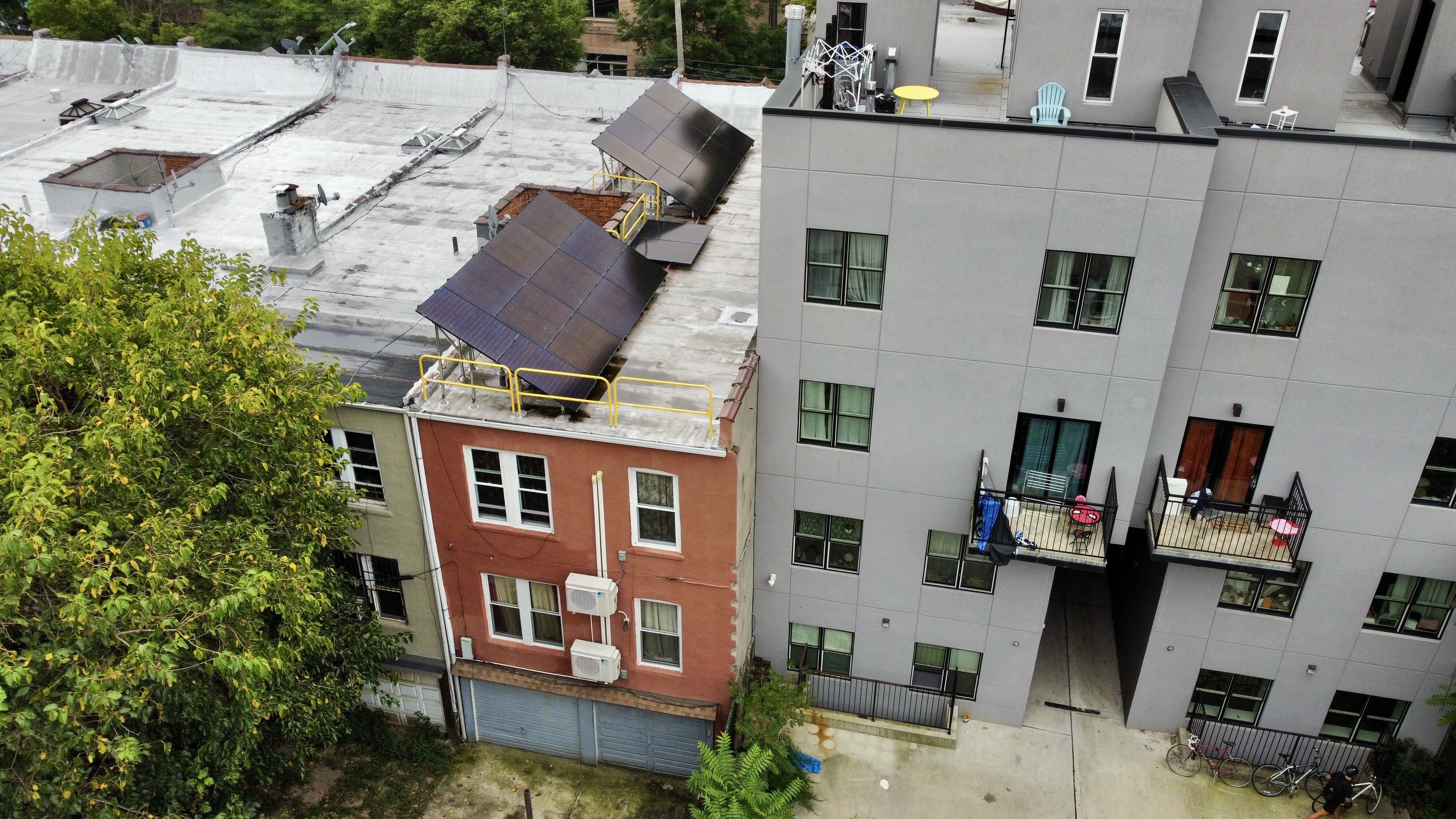
This is where flat roof solar gets genuinely interesting.
A canopy mount elevates the entire system about nine feet into the air on a freestanding structure. This does two things: it maximizes how many panels you can fit by expanding the usable installation surface upward, and it creates a shaded outdoor living space below, perfect for a rooftop lounge, garden, or dining area.
Canopy systems produce the most energy per installation because of the increased panel count and optimal positioning. They also protect the roof membrane underneath from direct sun exposure, which is one of the leading causes of flat roof wear.
See our flat roof solar options.
Not every flat roof solar installation goes smoothly and the failures usually come down to a handful of predictable problems.
Solar panels have a 25-year+ lifespan. If your roof is already deteriorating and nobody checks it before installation, you'll eventually need to remove the panels to repair the roof — and at significant cost. A good installer evaluates your roof's condition before a single panel goes up.
At Mpower Solar, roof repairs needed for solar readiness are included at no cost to you. That means rotted flashing, weak seams, or drainage issues get fixed before installation, not after.
Here are the five most common roof issues we fix before installing solar panels.
On a crowded NYC block, shadows move throughout the day and shift with the seasons. A shading analysis done in summer can look completely different in December when the sun sits lower in the sky. Installers who skip a thorough shading assessment often set unrealistic production expectations, and homeowners end up disappointed.
A proper site survey accounts for neighboring buildings, water towers, skylights, HVAC units, and anything else that interrupts direct sunlight. This is a core part of what a legitimate solar site assessment looks like.
Putting a tilt mount on a roof with only 18 inches of clearance from a parapet wall, for example, can create wind loading issues and limit the number of panels that actually fit. Choosing a flush mount when your energy needs call for maximum production can limit how much energy your panel system offsets. The mounting decision matters more than most homeowners realize, and it should be driven by actual measurements, not a one-size-fits-all approach.
This one is common and often invisible to the homeowner. Some solar companies sell the installation and then hand the actual work to a third-party subcontractor. Think of these subcontractors as a team that didn't do the site assessment, doesn't know the specific challenges of your roof, and has no long-term stake in how the system performs.
When you're vetting installers, ask directly:
Is your installation team in-house?
What certifications does the installation team carry?
Will the same team that surveys your roof also install it?
Here’s a full list of questions you should ask the solar installation company you want to work with before you sign anything.
Solar in New York City requires a Department of Buildings (DOB) permit, and the process takes longer than homeowners expect – especially if the installer isn't familiar with it. Delays in permitting can push a 30-day project into a 90-day project. An experienced NYC installer handles permitting as part of the process, not as an afterthought.
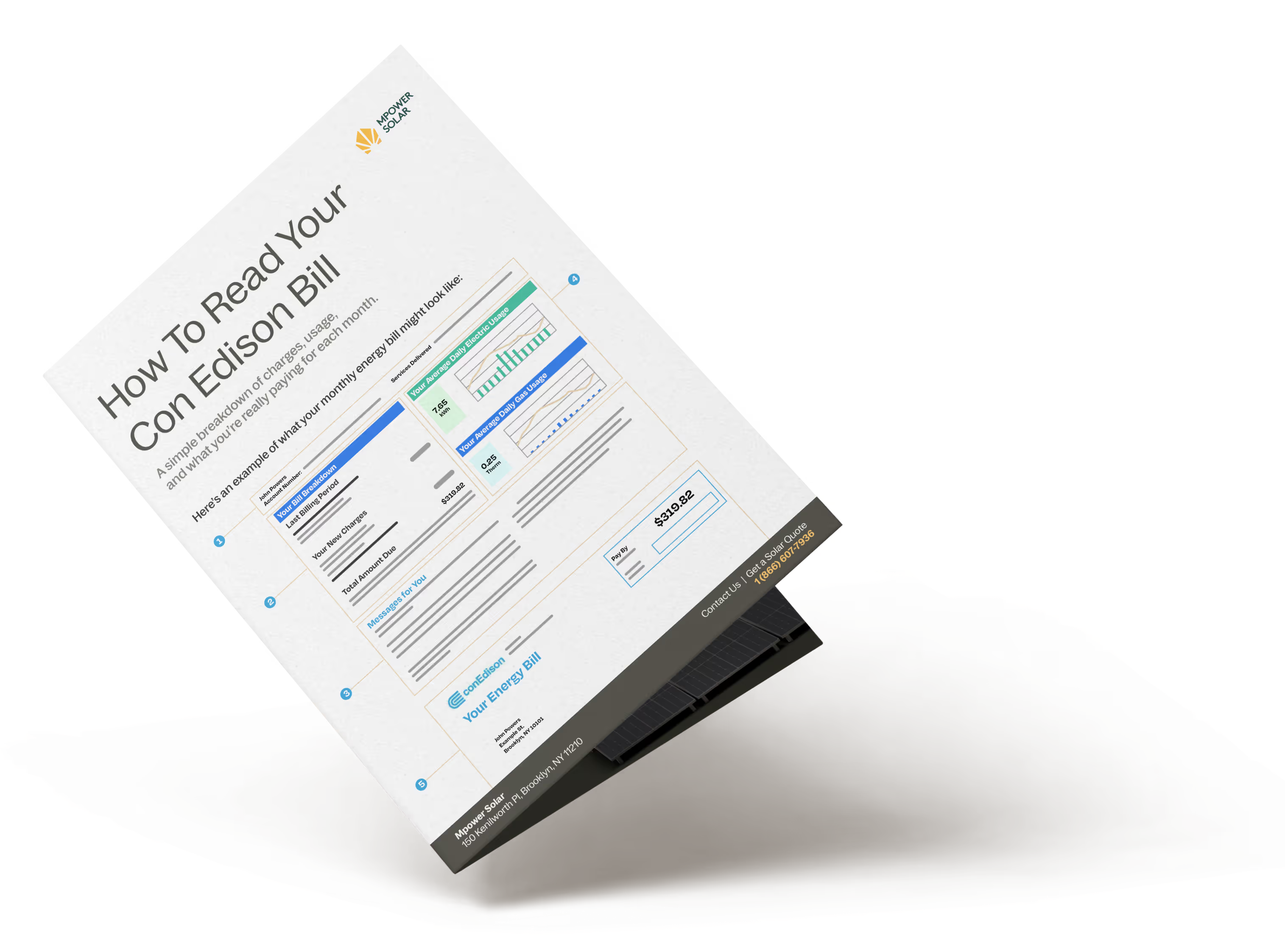
Inside you'll discover:
A few things make flat roof solar in NYC specifically advantageous right now:
New York homeowners can stack the NY State tax credit of 25% (up to $5,000) with the NYC property tax abatement of up to 7.5% of installation costs (per year for four years). That's a substantial reduction in upfront cost. See the full breakdown of NY solar incentives here.
The average NYC electric bill is rising about 4% per year. Unfortunately, thanks to grid strain from AI data centers, aging infrastructure, and extreme weather, the trend isn't slowing down. Going solar locks in a fixed payment while protecting you from whatever Con Ed decides to charge next year. Read our guide to the 2026 Con Edison rate hikes.
Under New York's net metering rules, any excess electricity your panels produce gets credited back to your Con Ed bill. On a sunny summer day, your system can essentially run your meter backward. Learn how net metering compares to battery storage for NYC homeowners.
When it’s done correctly, flat roof solar works extremely well in NYC. The right mounting system, a thorough site survey, proper roof prep, and an in-house installation team are the difference between a system that performs for 25+ years and one that creates headaches.
If you're not sure whether your roof is a good candidate, the honest answer is: it costs nothing to find out. We'll come out, take a look, and tell you whether solar makes sense for your situation and which system would be the best fit.
See our flat roof solar solutions
Calculate your potential savings
Want to see what flat roof solar looks like on real NYC homes? Browse our installation projects from across Brooklyn, Queens, the Bronx, and beyond.
Yes. Plus, flat roofs are well-suited for solar because the angle of the panels can be optimized rather than being fixed by the roof pitch. NYC installers offer three main mounting options for flat roofs: flush mounts, tilt mounts, and canopy mounts, each with different tradeoffs for aesthetics, space, and energy output.
It depends on your goals. Tilt mounts offer a good balance of efficiency and simplicity for most homeowners. Canopy mounts maximize panel count and energy production, and add a usable shaded space below. Flush mounts are the most discreet option. A site assessment will tell you which is best for your specific roof.
Most Mpower Solar installations are completed in under 30 days from consultation to final inspection including permitting, any necessary roof repairs, and the DOB permit required for NYC solar installations.
It shouldn't — if the installer is doing the work correctly. Mpower Solar includes a roof penetration warranty and workmanship warranty with every installation. If a leak develops, we come back and fix it at no cost.
NYC homeowners can qualify for a NY State income tax credit of 25% (up to $5,000) and the NYC Solar Property Tax Abatement, which reduces your property tax burden by up to 7.5% of installation costs (per year for four years).
Solar incentives in NYC won’t last forever—now’s the time to make the switch. Reach out for a quick, custom quote and see how much you could save.
.png)
.png)